Hempstead Locksmiths Service Team
Local locksmith team
Apr 8, 2026 12 min read
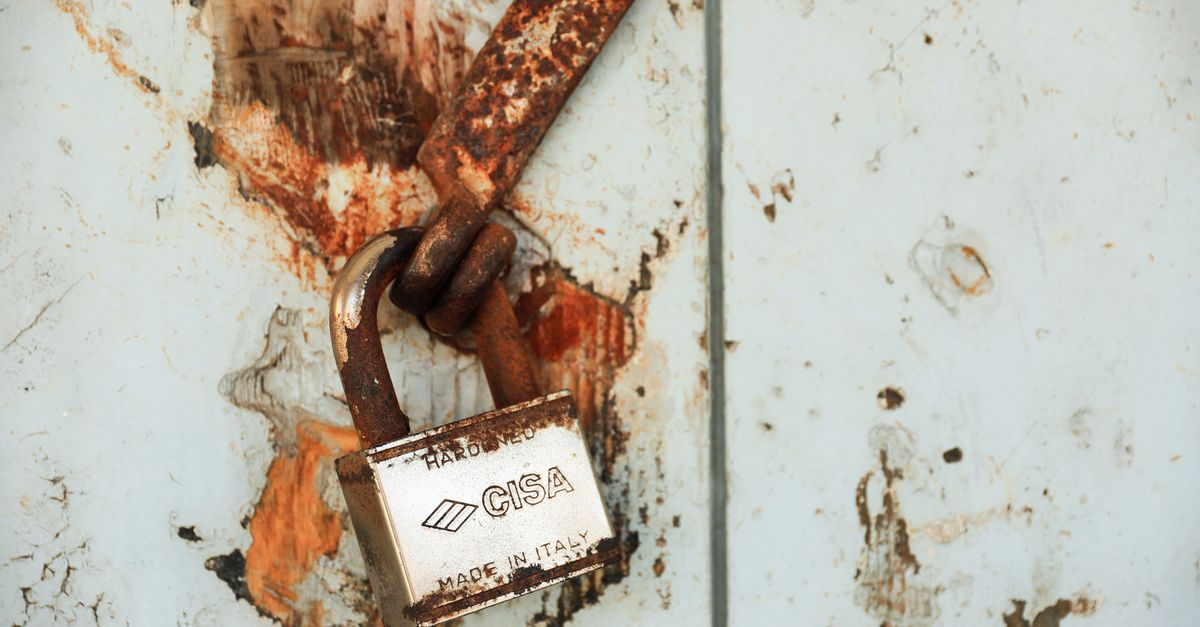
Most Hempstead homeowners never think about their door locks until the moment something goes wrong — a key that won't turn, a deadbolt that sticks on a cold January morning on Peninsula Boulevard, or worse, a lock that fails entirely and leaves you locked out on your own front stoop. The truth is, locks rarely fail without warning. They give signals for weeks or even months before they give out completely, and knowing those signals can save you from a stressful emergency at the worst possible time.
Whether you're dealing with an aging deadbolt, a sliding door lock that's been stiff all winter, or a mortise lock on an older Hempstead home that hasn't been serviced in years, this guide breaks down the five most telling warning signs your lock is nearing the end of its life — and what to do about each one before you end up stranded.
## Sign 1: Your Key Is Stiff, Grinds, or Feels Different Than It Used To
If you've started muscling your key in and out of the lock, or if you notice a grinding sensation when you turn it, that's not just an annoyance — it's a mechanical warning. Inside a lock cylinder, tiny pins and springs align precisely to let your key operate the lock. When those components wear down, corrode, or become packed with debris, the tolerances shift. You'll feel it first as resistance, then as grinding, and eventually the key may stop turning at all or — worse — snap off inside the cylinder. Exterior-facing locks on Hempstead homes are especially vulnerable to this because of the area's humid summers and salt-air winters blowing in off the South Shore.
Don't reach for WD-40 and call it done. That product is a water displacer, not a lock lubricant, and it actually attracts more grime over time. A professional locksmith can flush the cylinder, apply a proper dry graphite or Teflon lubricant, and assess whether the lock needs rekeying or full door lock installation with a new cylinder. If the cylinder is already worn to the point of grinding, lubrication alone is a temporary fix — the smart move is to change the door lock before it fails completely.
## Sign 2: The Deadbolt or Mortise Lock Doesn't Fully Extend or Retract
A deadbolt that only throws halfway, or a mortise lock whose bolt hesitates before engaging, is a lock that's already partially failing. The mortise lock is particularly common in older Hempstead housing stock — the stately colonials and Cape Cods around Uniondale and the Village of Hempstead itself often still have the original mortise units built into the door edge. These are robust locks when properly maintained, but the internal cam, tailpiece, and case can wear significantly over decades, causing sluggish or incomplete bolt movement.
Beyond the mechanical wear, a bolt that won't fully extend means your door isn't actually secure even when you think it's locked. That's a real safety issue, not a cosmetic one. A skilled locksmith who works with mortise door lock hardware can open the case, evaluate the internal components, and either service the existing unit or recommend a like-for-fit replacement. If you're noticing this problem, don't wait — call (516) 360-9503 and have a professional assess it before the bolt seizes entirely or you find yourself locked out with no way back in.
## Sign 3: Your Door Knob Lock Wiggles, Rattles, or Has Play in It
Grab your door knob and wiggle it. There should be virtually no lateral play — just a clean, firm rotation. If the knob wobbles, rattles on the rose plate, or has visible gaps where it meets the door face, the internal spindle or the mounting screws have likely loosened or worn. Door knob locks on interior and secondary exterior doors take an enormous amount of daily abuse — slammed doors, children hanging off handles, delivery packages pushed against them — and that cumulative stress translates into mechanical slop that degrades the locking mechanism itself.
A loose door knob lock might seem like a minor nuisance, but a spindle with too much play can prevent the latch from retracting cleanly, which creates a situation where the door appears closed but the latch isn't engaged. On a side entry or back door, that's an easy opportunity for a break-in. Tightening the screws is a five-minute fix if that's the cause, but if the internal mechanism is worn, the right call is a proper door lock installation with a new unit fitted and aligned to your door prep — a job that takes a trained locksmith under an hour in most cases.
## Sign 4: Sliding Door Lock Replacement Is Overdue — Here's How to Tell
Sliding glass doors are one of the most overlooked security points in a Hempstead home, yet they're also one of the most commonly forced entry points. The foot latch, the hook latch, and the keeper plate on a sliding door lock system wear out in a very specific way: the hook no longer seats cleanly into the keeper, the latch handle feels floppy or over-travels before engaging, or the lock engages but can be jiggled open with pressure on the door panel. If any of those scenarios sound familiar, sliding door lock replacement is not optional — it's urgent.
Unlike a standard deadbolt, a failing sliding door lock often can't be repaired by simply tightening hardware or lubricating the cylinder. The hook mechanism and the keeper plate wear as a matched pair, and once the keeper is chewed up or deformed, the whole assembly needs to go. A professional can source the correct replacement unit for your door brand and frame type, install it with the proper alignment so the hook engages fully under tension, and test it against lateral force before leaving. This is exactly the kind of job that looks simple on the surface but is easy to get wrong without the right tools and experience — a misaligned sliding door lock gives a false sense of security.
## Sign 5: Your Keypad or Smart Lock Is Glitching, and You're Not Sure How to Change the Code
Electronic and keypad locks have become increasingly popular on Hempstead homes, and for good reason — they eliminate the lost-key problem and make it easy to give temporary access to contractors or family members. But they fail in different ways than mechanical locks do. If your keypad is lagging, requiring multiple presses per digit, showing error codes, or refusing to accept a code that you know is correct, the lock is telling you its internal components — the circuit board, the motor, or the battery contacts — are degrading.
Many homeowners also realize too late that they've never changed the factory default code, which is a serious security vulnerability. If you're unsure how to change the code on a keypad door lock, the process varies by manufacturer — most Schlage and Kwikset smart locks have a dedicated programming button on the interior assembly, and the manual walks you through a sequence of button presses to set a new code. However, if the keypad itself is unresponsive or you've been locked out of the programming mode, that's not a DIY fix. A locksmith experienced with electronic door lock installation can reset the unit, walk you through how to change the door lock code going forward, and assess whether the hardware itself needs replacement. If the motor that drives the bolt has worn out, no amount of code changes will fix the underlying mechanical failure — the unit needs to come out and a new one needs to go in.
## What to Do When You Spot These Warning Signs: A Practical Hempstead Homeowner Checklist
If you've recognized one or more of the signs above, here's a straightforward action plan. First, don't wait for a full failure — a lock that's giving warning signals is almost always cheaper and less disruptive to address proactively than one that fails during a lockout. Second, check all your exterior locks, not just the front door. Many homeowners focus on the front deadbolt and overlook the back door knob lock, the garage entry, and the sliding door in the rear — all of which are real entry points that need to be in working condition. Third, if you have a mortise lock on an older door, have it inspected every few years even if it seems fine; these units are durable but the internal components do wear, and a trained eye will catch issues before they become emergencies.
Fourth, consider whether a change door lock project is actually an opportunity to upgrade security across multiple entry points at once. Replacing a single worn deadbolt is fine, but if your home has three exterior locks and two of them are original to a 1970s build, addressing them together makes sense. A residential locksmith can assess your whole home's lock profile in a single visit and give you a clear picture of where you stand. The final call on what to replace versus service is yours — but you'll make a better decision with real information in hand rather than guessing until something breaks. Reach out to our team at (516) 360-9503 any time — we're mobile, we cover all of Hempstead and the surrounding area, and we're available around the clock.
Our team handles a wide range of residential, commercial, and automotive locksmith services across Hempstead, including: residential deadbolt installation, residential lock rekeying, mortise lock service and replacement, door knob lock replacement, sliding door lock replacement, keypad door lock installation and programming, smart lock installation and troubleshooting, home lockout response, door lock installation for new construction, door lock installation after a break-in, door frame and strike plate reinforcement, master key system setup for multi-unit residential buildings, key duplication and high-security key cutting, mailbox lock replacement, garage door lock service, commercial deadbolt installation, commercial mortise lock service, commercial door lock installation for offices and retail, business lockout response, commercial master key system design, access control system installation, panic bar and push bar installation, file cabinet and desk lock service, automotive lockout response, car key replacement and programming, transponder key cutting, key fob replacement and programming, ignition lock cylinder service, broken key extraction from car doors and ignitions, and emergency locksmith response for both residential and commercial properties throughout the Hempstead area.
## Hempstead Locksmith: Serving the Village, the Town, and Every Street in Between
Hempstead is one of the most densely populated communities on Long Island, and its housing stock is diverse — everything from the pre-war bungalows near Fulton Avenue to the newer construction off Front Street, and the commercial corridors along Main Street that mix retail storefronts with upstairs residential units. That variety means the locksmith work we do here is genuinely varied: a mortise lock on a 1940s colonial is a completely different job from a sliding door lock replacement on a 1980s ranch or a smart lock installation on a new-build townhouse.
Being a mobile locksmith service means our team comes to you — no shop, no waiting room, no towing your situation somewhere else. Whether you're a homeowner on the south end of the village, a property manager overseeing a multi-unit building near Hempstead Turnpike, or a driver locked out of their car in the parking lot near Hofstra University, we're equipped to handle it on-site. We also serve drivers and homeowners throughout the broader Hempstead area, including surrounding communities across Nassau County. As a commercial locksmith partner for local businesses and a residential locksmith for homeowners, we understand the security needs that are specific to this community — and we show up with the right tools, not a one-size-fits-all approach.
Frequently asked questions
What is the average call-out fee for a locksmith in Hempstead, and what determines my final price?+
There's no single flat call-out fee that applies to every job — the final price depends on several factors: the type of lock involved (a standard deadbolt is different from a mortise lock or an electronic keypad unit), the time of day the work is performed, the travel distance to your location within the Hempstead area, and the specific parts or hardware needed. What we always do is confirm an exact, up-front price with you before any work begins, so there are no surprises on the invoice. Call (516) 360-9503 and describe your situation — we'll give you a clear quote right on the call.
How long does it usually take for a locksmith to come to a Hempstead address?+
Response times vary depending on traffic conditions in the area — anyone familiar with Hempstead Turnpike during rush hour knows that travel times can swing significantly. That said, as a mobile locksmith team operating locally in and around Hempstead, we prioritize getting to you as quickly as the roads allow. When you call (516) 360-9503, we'll give you an honest estimated arrival window based on where we are at that moment. For true emergencies — lockouts, broken locks on exterior doors — we treat those as priority dispatches.
How do I change the code on my keypad door lock, and when should I call a locksmith instead of doing it myself?+
The process for how to change the code on a door lock varies by brand and model. On most Schlage and Kwikset keypad locks, you press a programming button on the interior side, enter the existing master code, and then input your new code following the sequence in the manual. If that process works cleanly, you're all set. However, if the keypad is unresponsive, the lock is in an error state, you've lost access to the programming code, or the motor driving the bolt is sluggish, those are signs the hardware itself needs professional attention — not just a code reset. In those cases, a locksmith can service or replace the unit and get your new code set correctly from the start.
My sliding door lock is loose but still latches — do I really need sliding door lock replacement, or can it be repaired?+
It depends on what specifically is worn. If the latch handle is loose due to a single stripped screw, that can sometimes be addressed without full replacement. But if the hook mechanism itself is worn, the keeper plate is deformed, or the latch over-travels before it catches, repair is usually not a lasting solution — the components wear as a matched pair and a loose fit only gets looser with use. A professional assessment will tell you definitively which situation you're dealing with. Given that sliding doors are a common entry point, we recommend erring on the side of replacement when there's any doubt about the lock's ability to hold under pressure.